Lions, often called the “kings of the jungle,” are apex predators with a diet that reflects their strength and dominance in the wild. Understanding what lions eat offers a window into their survival strategies, social structures, and ecological roles. This article dives deep into the carnivorous diet of lions, exploring their prey, hunting habits, and the factors that shape their meals, all while weaving in real-world insights and a touch of storytelling to bring the savanna to life.
The Carnivorous Diet of Lions
Lions are obligate carnivores, meaning their survival depends entirely on meat. Their powerful jaws, sharp claws, and keen senses are built for hunting and consuming flesh. From the vast plains of the Serengeti to the dense bush of Kruger National Park, lions primarily target large herbivores, but their diet is more varied than you might think.
Why Meat Is Essential for Lions
A lion’s physiology demands a high-protein, high-fat diet to fuel its muscular body and intense bursts of energy during hunts. Unlike omnivores, lions lack the digestive enzymes to process plant matter effectively. Their short digestive tracts are designed to break down meat quickly, ensuring they extract maximum nutrients.
Primary Prey: Large Herbivores
Lions typically hunt large ungulates, which provide the bulk of their caloric needs. These animals are abundant in their habitats and offer enough meat to sustain a pride.
- Wildebeest: A favorite in the Serengeti, wildebeests are plentiful during migrations.
- Zebra: Their size and herd behavior make them a challenging but rewarding target.
- Buffalo: Tough and dangerous, buffalo are often tackled by prides working together.
- Antelope: Species like impala or kudu are agile but vulnerable to skilled hunters.
Smaller Prey and Opportunistic Feeding
When large prey is scarce, lions adapt by targeting smaller animals. This flexibility ensures they don’t go hungry during lean times.
- Warthogs: Quick but vulnerable, warthogs are a common snack.
- Gazelles: Small and fast, these are often caught by younger or solitary lions.
- Birds and Reptiles: In desperate times, lions may eat ostriches, crocodiles, or even snakes.
Hunting Strategies: Teamwork Makes the Dream Work
Lions are unique among big cats for their social hunting style. Prides, consisting of related females and their cubs, work together to bring down prey. I once watched a documentary where a pride in Botswana stalked a buffalo herd at dusk, and the teamwork was mesmerizing—like a well-rehearsed dance. The lionesses fanned out, some distracting the herd while others ambushed from the flanks.
The Role of Lionesses vs. Male Lions
Lionesses are the primary hunters, using stealth and coordination to execute kills. Males, while capable hunters, often focus on protecting the pride or stealing kills from others.
Ambush and Chase Techniques
Lions rely on stealth, getting as close as possible before launching a high-speed chase. Their success rate is only about 20-30%, so strategy is key.
Scavenging: A Practical Plan B
Lions aren’t above scavenging. They’ll steal kills from hyenas or feed on carrion when hunting fails. This adaptability ensures survival in harsh environments.
Factors Influencing a Lion’s Diet
A lion’s diet isn’t static; it shifts based on environment, season, and availability. During a safari in Kenya, our guide explained how drought forced lions to hunt smaller prey like warthogs, as larger herds migrated away. These factors paint a complex picture of survival.
Habitat and Prey Availability
Savanna lions have access to abundant herbivores, while those in arid regions may rely on smaller or less desirable prey. Coastal lions in Namibia even hunt seals!
Seasonal Changes
During wet seasons, prey is plentiful but harder to catch due to lush vegetation. In dry seasons, weakened animals become easier targets.
Competition with Other Predators
Lions face competition from hyenas, leopards, and cheetahs. Hyenas, in particular, can drive lions off their kills, especially if the pride is small.
Nutritional Needs and Feeding Habits
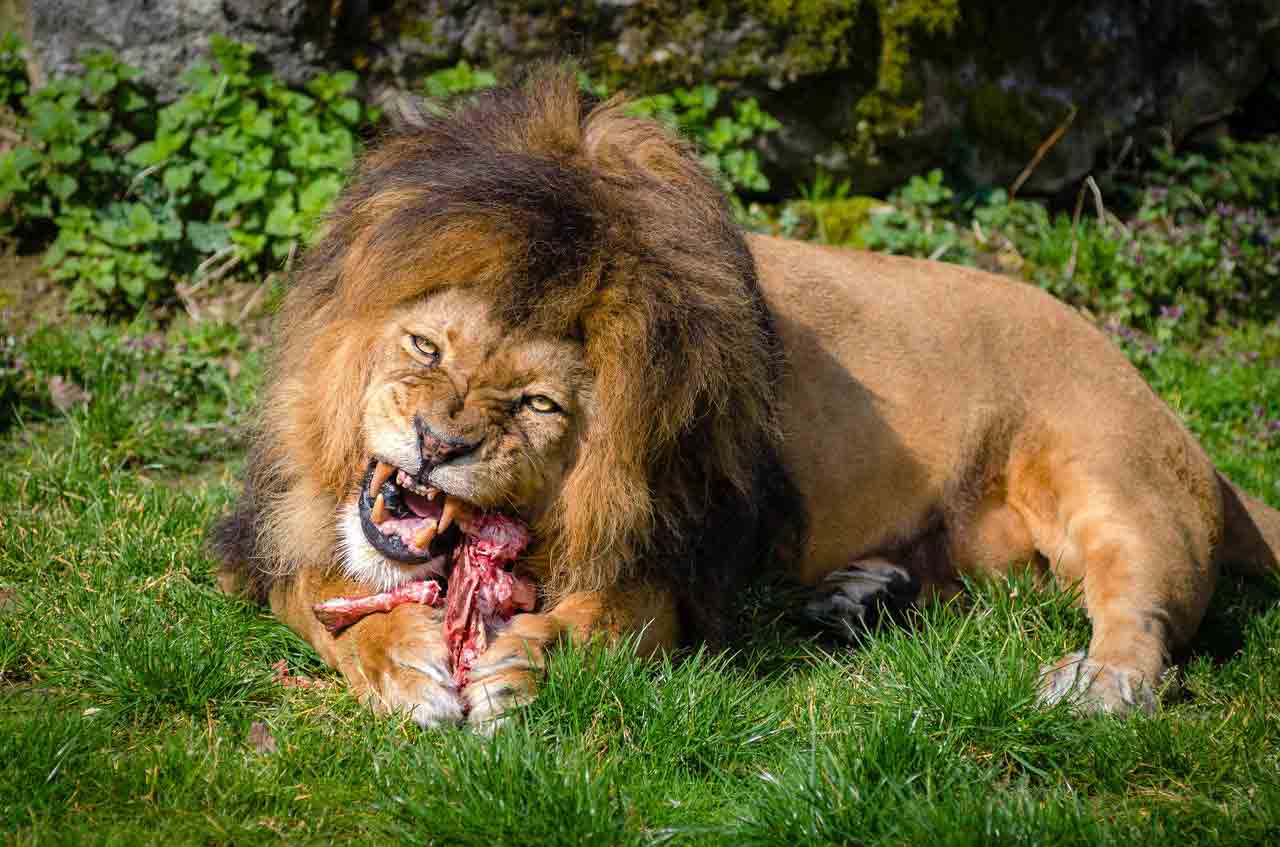
Lions consume massive amounts of meat to meet their energy demands. An adult male can eat up to 15% of his body weight in one sitting—imagine devouring 30 pounds of steak! Their feeding habits reflect their social structure and survival needs.
How Much Do Lions Eat?
A lion can consume 10-20 pounds of meat daily, though they often gorge and then fast for days. Cubs and younger lions eat less but need frequent meals.
Feeding Hierarchy in a Pride
The pride’s hierarchy dictates who eats first. Males typically claim the best portions, followed by lionesses, with cubs eating last.
Bone and Organ Consumption
Lions don’t just eat muscle tissue. They crush bones for marrow and devour organs like the liver, which are rich in nutrients.
Comparison: Lion Diets Across Regions
| Region | Primary Prey | Secondary Prey | Unique Dietary Habits |
|---|---|---|---|
| Serengeti, Tanzania | Wildebeest, Zebra, Gazelle | Warthog, Small Antelope | Heavy reliance on migration patterns |
| Kruger, South Africa | Buffalo, Kudu, Impala | Giraffe, Small Mammals | Opportunistic scavenging from other predators |
| Kalahari Desert | Gemsbok, Springbok | Ostrich, Small Reptiles | Adapted to smaller, less frequent meals |
| Namibian Coast | Seals, Seabirds | Fish, Small Antelope | Rare marine-based diet |
This table shows how lions adapt their diet based on their environment, highlighting their resilience.
Pros and Cons of a Lion’s Diet
Pros
- High Energy: Meat provides the calories needed for hunting and territorial defense.
- Nutrient-Dense: Organs and bones supply essential vitamins and minerals.
- Social Bonding: Group hunting strengthens pride dynamics.
Cons
- High Risk: Hunting large prey like buffalo can lead to injury or death.
- Inconsistent Meals: Failed hunts or scarce prey can lead to starvation.
- Competition: Other predators often challenge lions for their kills.
People Also Ask (PAA)
What is the main food source for lions in the wild?
The main food source for lions is large herbivores like wildebeest, zebra, and buffalo. These animals provide the bulk of their diet due to their size and abundance in lion habitats.
Do lions eat other predators?
Yes, lions occasionally eat other predators like hyenas or leopards, often to eliminate competition. However, this is rare and usually occurs during food scarcity.
How often do lions eat?
Lions eat every 2-4 days, depending on prey availability. They gorge on large kills and can fast until the next successful hunt.
Can lions survive without meat?
No, lions are obligate carnivores and cannot survive without meat. Their digestive systems are not equipped to process plant-based foods.
Where to Learn More About Lion Diets
For those eager to dive deeper, reputable sources like the African Wildlife Foundation offer detailed insights into lion ecology. Documentaries on platforms like National Geographic or BBC Earth also provide stunning visuals of lions in action. Local zoos with conservation programs, such as the San Diego Zoo, often have educational resources on lion diets.
Best Tools for Studying Lion Diets
If you’re a wildlife enthusiast or student, consider these tools to explore lion diets further:
- Field Guides: Books like The Behavior Guide to African Mammals by Richard D. Estes are invaluable.
- Wildlife Apps: Apps like iNaturalist help identify prey species in lion habitats.
- Documentary Platforms: Subscriptions to National Geographic or BBC Earth offer in-depth lion content.
- Conservation Programs: Joining programs through organizations like WWF provides hands-on learning opportunities.
FAQ: Common Questions About Lion Diets
Do lions eat every day?
No, lions don’t eat daily. They typically eat every 2-4 days, gorging on large kills and fasting between hunts.
What happens if lions can’t find prey?
When prey is scarce, lions scavenge, eat smaller animals, or even consume carrion. In extreme cases, they may go hungry for days.
Do lions eat plants or fruits?
Lions cannot digest plants or fruits effectively. Their diet is almost exclusively meat-based, though they may accidentally ingest grass while eating prey.
How do lions choose their prey?
Lions target prey based on availability, size, and vulnerability. They often choose weaker or isolated animals to increase their success rate.
Can lions eat rotten meat?
Lions can tolerate carrion and may eat rotten meat when fresh kills are unavailable, thanks to their robust digestive systems.
A Personal Reflection on Lions
Watching lions hunt on a safari was a humbling experience. The raw power of a lioness sprinting after a zebra, combined with the pride’s teamwork, felt like witnessing nature’s ultimate drama. It’s a reminder of how finely tuned their diet is to their environment—a balance of strength, strategy, and survival. Lions don’t just eat; they embody the cycle of life in the wild.
Conclusion
Lions’ diets are a testament to their adaptability and strength as apex predators. From hunting massive buffalo to scavenging scraps, their eating habits reflect the challenges and opportunities of their habitats. By understanding what lions eat, we gain insight into their role in ecosystems and the delicate balance of nature. Whether you’re a wildlife enthusiast or just curious, the world of lions is as fascinating as it is fierce. For more on big cat conservation, check out WWF’s lion initiatives or explore local wildlife programs to stay connected to these majestic creatures.