Picture this: You’re on a dusty safari track in the African bush, heart pounding as a sleek shadow darts across the horizon. Is it a blur of speed or a stealthy stalker? I’ve been there, binoculars glued to my face, whispering guesses to my guide while my mind races faster than the animal itself. As someone who’s chased these cats from the savannas of Kenya to the rainforests of Belize—volunteering at sanctuaries and leading wildlife tours for over a decade—these beasts aren’t just icons of the wild. They’re survivors, each with a story etched in spots, speed, and sheer grit. If you’ve ever mixed up a leopard’s lazy tree lounge with a cheetah’s frantic sprint, you’re in good company. Let’s unpack what makes each one tick, so next time you spot one, you’ll know exactly who you’re dealing with.
Understanding the Big Cat Family
Big cats aren’t just oversized house pets with attitude; they’re a diverse crew within the Felidae family, evolved over millions of years to rule their realms. Think of leopards, cheetahs, jaguars, and black panthers as specialized athletes—each tuned for a different game, from endurance climbs to explosive dashes. What ties them? That raw, predatory elegance that stops you in your tracks. But dive deeper, and their differences pop like fireworks. From coat patterns to hunting hacks, these traits aren’t random; they’re survival blueprints honed by habitats from open plains to tangled jungles.
I’ve lost count of the times a newbie on my tours points and yells “Cheetah!” only for it to be a lounging leopard. It’s hilarious in hindsight, but it underscores how these cats blur lines for the untrained eye. Understanding their family tree isn’t just trivia—it’s key to appreciating why conservation matters. With threats like habitat loss hitting hard, knowing who’s who helps us rally for the right fights.
Meet the Leopard: The Master of Adaptability
Leopards are the ultimate survivors, thriving everywhere from African scrublands to Asian highlands, making them one of the most widespread big cats on the planet. Their scientific name, Panthera pardus, hints at their elusive nature—pardus meaning “panther-like” in Greek. These cats weigh 60 to 130 pounds, with males bulkier than females, and sport a golden coat splashed with black rosettes that look like shadowy blooms.
What I love most about leopards is their sheer versatility. I’ve watched one in Sri Lanka haul a full-grown monkey up a sheer trunk like it was hauling groceries—effortless, almost bored. They’re nocturnal ninjas, blending into dusk with those rosettes that break up their outline against dappled light. Unlike flashier kin, leopards don’t roar; they rasp a saw-like call that chills the spine, a sound I’ve heard echoing through misty mornings that still gives me goosebumps.
Leopard Physical Traits
Leopards boast a lithe, muscular frame perfect for climbing, with shoulders rising to about 28 inches and tails that double as balance beams during leaps. Their rosettes are open circles—hollow in the center, unlike a jaguar’s dotted ones—camouflaging them in everything from grasslands to treetops. Eyes glow amber in low light, and those retractable claws? Sharp enough to grip bark like Velcro.
This build screams efficiency. During a night drive in South Africa’s Kruger National Park, I spotted a leopard dragging its kill skyward, muscles rippling under that spotted fur. It’s not brute force; it’s smart power, letting them stash meals away from thieving hyenas. Females are sleeker, often 10% lighter, tuned for solo hunts in dense cover.
Leopard Habitat and Behavior
You’ll find leopards in 70 countries, from sea level to 16,000 feet, adapting to deserts, forests, and mountains with chameleon-like ease. They’re solitary by nature, except when moms school cubs in the art of ambush—creeping low, then exploding in a 60-foot pounce.
Behaviorally, they’re the introverts of the cat world: secretive, caching kills in trees to dine in peace. I once spent hours tracking one in Namibia’s Etosha, only to find it napping in a fever tree, utterly unbothered. They hunt anything from rodents to young antelope, using stealth over speed, and mark territories with scent sprays that linger like a personal signature.
The Cheetah: Speed Demon of the Savanna
If leopards are the adaptable all-rounders, cheetahs are the Formula 1 racers—built for one thing: blistering velocity in open African plains. Scientifically Acinonyx jubatus, they’re the oddballs of big cats, unable to roar but purring like oversized tabbies. Slender at 75 to 140 pounds, with a shoulder height of 30 inches, their tawny coat is dotted with solid black spots, no fancy rosettes here.
Cheetahs own my heart for their vulnerability masked as grace. On a golden-hour game drive in Botswana, I witnessed one hit 60 mph in seconds, a gazelle in its jaws before it could blink. Those black “tear marks” from eye to mouth aren’t mascara mishaps; they cut glare like a runner’s streak, letting them lock on prey from afar. But post-sprint? They pant hard, overheating fast—evolution’s trade-off for that turbo engine.
Cheetah Physical Traits
Cheetahs are all legs and lungs: long limbs, flexible spine like a spring-loaded slingshot, and non-retractable claws for extra traction, grippy as sneaker treads. Their head is small and aerodynamic, with a skull built for quick bites to the throat, not crushing bones. Weighing less than a jaguar but taller, they’re streamlined sprinters, not brawlers.
Humor me: Imagine a cheetah at a cat gym—they’d ace the treadmill but flop at weightlifting. I’ve felt the ground tremble under a chase in Maasai Mara; it’s poetry in motion, but their lightweight frame means they’re bullied by lions at kills. Cubs sport a fluffy mohawk mane for camouflage, shedding it as they grow into those iconic speedsters.
Cheetah Habitat and Behavior
Confined mostly to sub-Saharan Africa (with a tiny Iran holdout), cheetahs crave flat, grassy expanses where sightlines stretch forever. They’re diurnal hunters, peaking at dawn and dusk to avoid the heat that saps their stamina.
Socially, they’re the friendly outliers: coalitions of brothers hunt together, chirping like birds to coordinate. Females go solo with litters of three to five cubs, teaching them to stalk by play-chasing. High cub mortality—up to 90%—tugs at you; I’ve teared up seeing a lone survivor shadow its mom, learning life’s brutal odds.
Jaguar: The Jungle Powerhouse
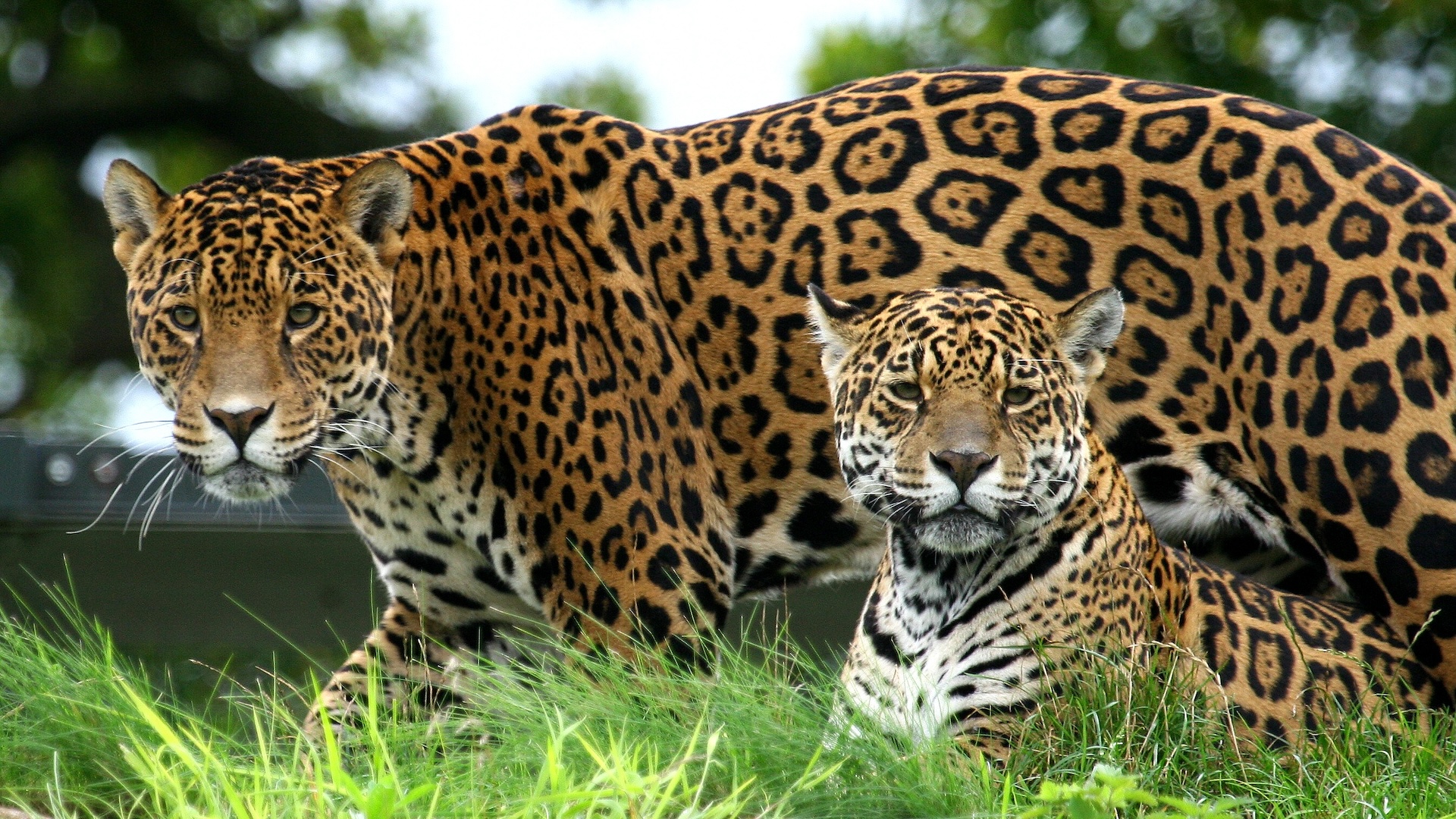
Jaguars, or Panthera onca, are the Americas’ answer to raw might—stocky tanks prowling Central and South American wilds. Third-largest cat after tigers and lions, they tip 120 to 300 pounds, with males boasting broader heads and jaws that snap like bolt cutters. Their coat? Golden with bold rosettes enclosing central spots, like bullseyes on a tawny canvas.
There’s something primal about jaguars that hits different. In Belize’s Cockscomb Basin, I once canoed within yards of one fishing—ears perked, then a splash and gone, caiman in tow. They’re not show-offs; their power’s quiet, but that 1,500 PSI bite? It crushes skulls, a feat no other cat matches. Black variants add mystery, but even spotted, they exude “don’t mess” vibes.
Jaguar Physical Traits
Built like wrestlers: short, sturdy legs for power bursts, a barrel chest, and paws wider than a man’s hand for silent stalking. Rosettes are larger, filled rosettes distinguishing them from leopards, with melanistic forms showing ghosted patterns up close. Tails are shorter, aiding swims—jaguars love water, unlike their drier cousins.
Spot the difference? Jaguars look chunkier, heads blockier. During a Pantanal boat tour, I marveled at one’s swim across a river, emerging dripping but triumphant. Females are smaller but no less fierce, birthing two to four cubs that stick close for two years, learning to crush through tough hides.
Jaguar Habitat and Behavior
From Mexican swamps to Argentine pampas, jaguars claim 18 countries, favoring riversides and rainforests where prey’s plentiful. Nocturnal mostly, they roar deeply, a guttural rumble I’ve felt in my chest during Amazon nights.
They’re lone wolves—er, cats—ambushing with explosive force, dragging kills to water’s edge to deter thieves. Arboreal too, though less than leopards, climbing for vantage. Conflicts with ranchers rise as habitats shrink, but eco-tourism’s a lifeline; I’ve seen locals beam when jaguars draw respectful crowds.
Black Panther: Myth Meets Reality
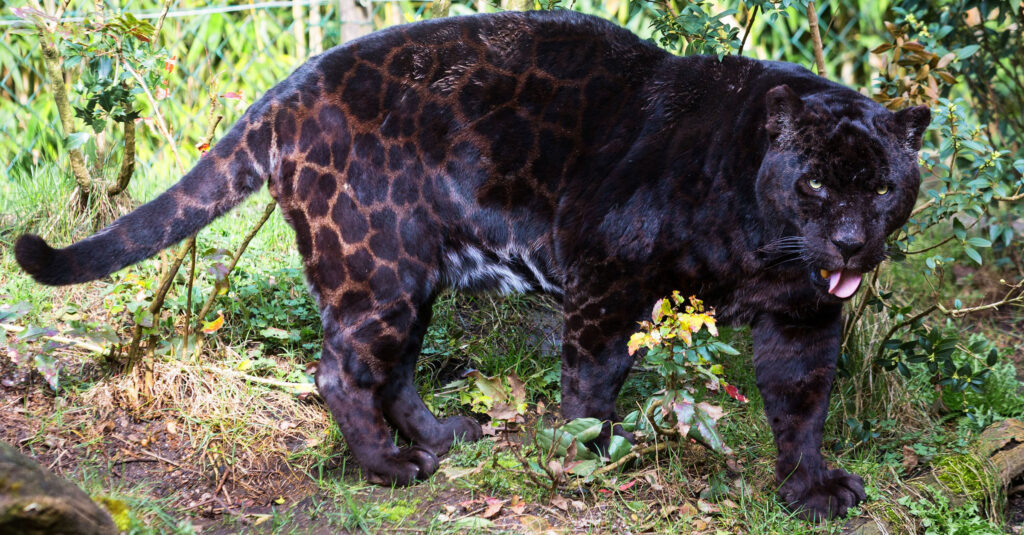
Black panthers aren’t a species—they’re the dark alter egos of leopards or jaguars, thanks to melanism flooding their coats with extra pigment. In Africa and Asia, it’s a leopard; in the Americas, a jaguar. Weighing the same as their spotted siblings, that ebony fur hides rosettes visible in sunlight, like velvet secrets.
The allure? Pure enigma. As a kid, I devoured tales of Bagheera from The Jungle Book, imagining that sleek shadow as magic. Years later, in India’s Tadoba reserve, a black leopard crossed my path—eyes like embers, vanishing into vines. No superpowers, just evolutionary edge: better night camo in dense woods, where light barely filters.
Black Panther Physical Traits
Identical to base cats but shrouded: muscular for leopards, beefier for jaguars, with the same rosettes peeking through. Claws retract, bites crush (jaguars especially), and they’re swimmers if jag-based. The gene’s dominant in jaguars, recessive in leopards—rarer in open areas, thriving in shadows.
Up close, it’s eerie beauty. I’ve stroked a rescued melanistic leopard’s fur at a rehab center—silky, warm, spots faint like whispers. They move like smoke, blending so well I’ve lost one mid-stare, only to hear a rustle yards away.
Black Panther Habitat and Behavior
Wherever their parent species roam, but denser forests boost odds—malanism shines in low light. Behaviors mirror origins: tree-hauling leopards, water-loving jaguars, all solitary hunters with raspy calls or deep roars.
Pop culture amps the mystique—think Wakanda’s ruler—but reality’s grittier. Poaching targets their “exotic” look, yet sanctuaries thrive. Visiting Panthera’s Jaguar Corridor site opened my eyes to corridor projects linking habitats, a beacon for these ghosts in the green.
Key Differences: A Side-by-Side Comparison
Spotting these cats in the wild feels like a puzzle, but clues abound in build, spots, and swagger. Leopards climb like pros, cheetahs sprint like pros, jaguars crush like pros, and panthers ghost like pros. Here’s a quick table to etch it in:
| Feature | Leopard | Cheetah | Jaguar | Black Panther |
|---|---|---|---|---|
| Scientific Name | Panthera pardus | Acinonyx jubatus | Panthera onca | Melanistic variant |
| Weight (lbs) | 60-130 | 75-140 | 120-300 | Same as base |
| Top Speed (mph) | 36 | 60-70 | 50 | Same as base |
| Coat Pattern | Open rosettes | Solid black spots | Filled rosettes | Black with hidden spots |
| Habitat | Forests, savannas | Open grasslands | Rainforests, wetlands | Dense cover |
| Vocalization | Raspy cough | Chirps, purrs | Deep roar | Same as base |
| Bite Force (PSI) | ~700 | ~500 | 1,500 | Same as base |
This snapshot? Gold for quick recalls. During a quiz night at a lodge bar, I stumped friends with bite forces—jaguars win, hands down, cracking caiman like nuts.
Habitat and Distribution Breakdown
Habitats shape these cats like clay. Cheetahs need vast, treeless runs—Africa’s 7,000 left huddle in Namibia and Botswana, per WWF reports. Leopards? Everywhere adaptable, from Ethiopian highlands to Indonesian islands, populations fragmented but resilient at ~700,000.
Jaguars rule the Americas’ wet wilds, from Arizona fringes to Patagonia, but only 170,000 remain, squeezed by soy farms. Black panthers cluster in humid hideouts—Malaysia’s forests for leopards, Brazil’s Pantanal for jaguars—where darkness aids hunts. Overlaps? Rare; cheetahs dodge leopard turf wars. Climate shifts threaten all, drying cheetah plains and flooding jaguar rivers.
Hunting Techniques and Diet Insights
Hunting’s where personalities shine. Cheetahs chase daylight dashes, tripping gazelles at 70 mph before a neck bite—diet’s lean: impala, hares. Leopards? Ambush artists, dragging 200-pound kills aloft, feasting on warthogs to birds.
Jaguars ambush aquatic-style, skull-crushing capybaras or turtles—omnivorous edge with fish and frogs. Panthers inherit stealth: black hides perfect for nocturnal pounces. I’ve seen a jaguar panther vanish mid-hunt, reappearing with a splash—diet mirrors, but darkness amps success.
- Pros of Cheetah Speed: Catches fleet-footed prey others miss.
- Cons: Overheats fast, loses kills to scavengers.
- Leopard Versatility Pros: Eats anything, anywhere.
- Cons: Territorial fights drain energy.
- Jaguar Power Pros: Tackles armored foes.
- Cons: Energy-intensive in watery haunts.
- Panther Stealth Pros: Nighttime edge unbeatable.
- Cons: Heat absorption in tropics.
These styles evolved for niches—cheetahs for speed, jaguars for strength—mirroring human athletes’ specializations.
Conservation Challenges Facing These Cats
These icons teeter on edges. Cheetahs, vulnerable with inbreeding woes, lose ground to fences—India’s reintro from Namibia sparks hope. Leopards face poaching for skins, retaliatory kills in India numbering hundreds yearly.
Jaguars battle deforestation; 50% habitat gone since 1900, per Panthera. Black panthers, rarer, suffer myth-fueled hunts. Climate? Dries cheetah waterholes, floods jaguar lairs. Solutions? Corridors, anti-poaching patrols—I’ve joined camera-trap teams, nailing poacher trails.
Emotional pull? Watching a cheetah coalition collapse from disease hits hard—reminds us tourism funds fixes. Donate to WWF Big Cats or visit ethical spots; your lens fuels change.
Pros and Cons: Which Cat Wins in a Wild Scenario?
Hypotheticals aside, each shines contextually. In a sprint? Cheetah, no contest. Tree tussle? Leopard’s domain. River rumble? Jaguar reigns. Panther? Sneak-attack supreme.
Cheetah Pros: Unmatched velocity, social bonds boost hunts. Cons: Fragile frame, poor fighters.
Leopard Pros: Adaptable diet, climbing cache. Cons: Smaller size limits big game.
Jaguar Pros: Bone-crushing bite, swim prowess. Cons: Solitary, habitat-specific.
Panther Pros: Camo king, versatile base traits. Cons: Visibility issues daytime.
In my dream matchup—savanna showdown—leopard edges for smarts, but jaguar’s power tempts. Reality? They coexist, balancing ecosystems.
People Also Ask
Google’s buzzing with these gems—real queries from curious minds like yours. Here’s the scoop, snippet-style for quick hits.
What’s the difference between a leopard and a jaguar?
Leopards and jaguars both rock rosettes, but jaguars’ are filled with spots, larger and bolder, while leopards’ are open and clustered. Jaguars are bulkier, American jungle-dwellers with skull-crushing bites; leopards slimmer, global climbers using throat holds. Location clinches it: Americas scream jaguar, Africa/Asia yell leopard.
Can you tell a cheetah from a leopard by spots?
Absolutely—cheetahs flaunt solid black dots on tan fur, plus those iconic tear streaks, with a lanky build for sprints. Leopards? Rosette clusters, no tears, stockier for stealth. Cheetahs purr, can’t roar; leopards rasp. One’s a marathon mixer-upper, the other’s a tree-top thief.
Is a black panther a jaguar or leopard?
Depends on the continent: African/Asian black panthers are melanistic leopards; American ones, jaguars. Same traits—spots hidden under black—but jaguars swim and crush harder, leopards climb higher. Not a breed, just a color quirk boosting night hunts in thick cover.
Why can’t cheetahs roar like other big cats?
Cheetahs lack the full hyoid bone setup for roaring—it’s ossified, allowing purrs instead. Evolution picked speed over volume; their chirps suit open plains signaling. Lions and jaguars boom for territory; cheetahs whisper to kin. Trade-off: sonic subtlety for supersonic strides.
How fast is a cheetah compared to a jaguar?
Cheetahs clock 60-70 mph in bursts, outpacing jaguars’ 50 mph top-end. But jaguars sustain power longer in ambushes, while cheetahs tire after 20 seconds. Speed vs. stamina—cheetahs chase plains sprinters, jaguars ambush river beasts. Nature’s drag race, different tracks.
Best Ways to Learn More About These Big Cats
Craving deeper dives? Start with docs—Big Cat Tales on discovery+ chronicles Masai Mara dramas, raw and riveting. For books, George Schaller’s The Serengeti Lion (with leopard insights) or Craig Packer’s cheetah studies ground you in science. Navigational nudge: Stream on PBS Nature for free episodes.
Transactional tip: Grab binoculars like Nikon Monarchs for $200-300 on Amazon—ideal for ethical viewing. Or join Panthera tours for guided jaunts, funding conservation. Tools? Apps like iNaturalist log sightings, turning you into citizen scientist.
FAQ
Are black panthers more aggressive than spotted ones?
No—the melanism doesn’t amp aggression; behavior ties to species and upbringing. Black leopards might seem fiercer in shadows, but it’s camo, not temper. I’ve handled both in rehab; personality varies by cat, not color. Myths from movies like The Black Panther fuel this, but science says nah.
What’s the biggest threat to cheetahs today?
Habitat loss and human-wildlife clashes top the list, with low genetic diversity from small populations causing health woes. Only 7,000 wild cheetahs remain, per IUCN. Fence conflicts in Namibia kill cubs yearly—heartbreaking, but rewilding projects like Namibia’s offer hope.
Can jaguars and leopards interbreed?
They’re close cousins in Panthera but different species—no viable hybrids in the wild. Zoo attempts fail fertility-wise. Evolution split them 2-3 million years ago; jaguars went American powerhouse, leopards global ghosts. Cool thought, but nature draws lines.
How do you spot a leopard vs. cheetah in the wild?
Look low: Cheetahs have those tear marks and solid spots, loping gait on skinny legs. Leopards? Rosettes, bushy tails, tree perches. Distance helps—cheetahs in herds’ paths, leopards edging thickets. Pro tip: Listen; cheetah chirps, leopard saws.
Where can I see all four in one trip?
Tough—cheetahs Africa-only, jaguars/panthers Americas. Combo Africa (leopard/cheetah) then Belize (jaguar/panther). Ethical spots: Kenya’s Mara for cheetards, Brazil’s Pantanal for jag-panthers. Budget $5K-10K; supports locals over selfies.